
Different Jobs, Same Room: Creating a Shared Home Office That Works
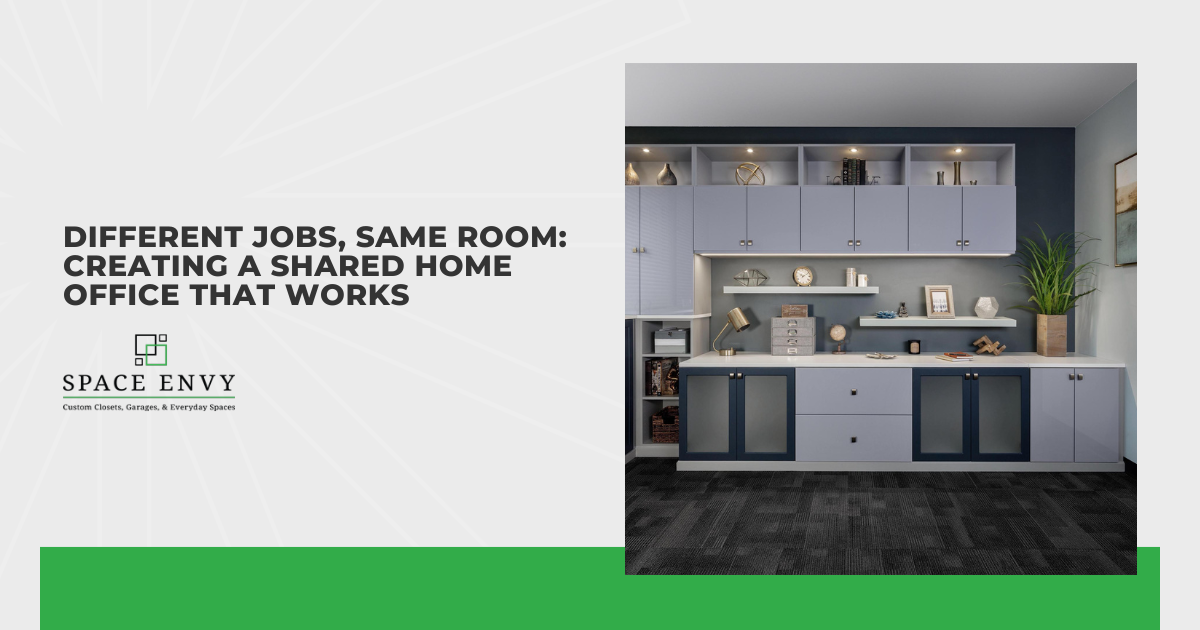
Sharing a home office with someone who works a completely different job than you do is more complicated than it sounds. Video calls overlap, desk space gets claimed, and the workarounds you agreed on stop working somewhere around week two. What makes a shared setup actually function isn't just compromise, it's intentional design that accounts for how differently two people can operate.
Different jobs come with different tools, rhythms, and noise levels, and your space needs to account for all of it. I've worked with enough shared setups to know that the friction most people feel is a planning problem. When the room is designed around two distinct work styles from the start, it stops being a daily source of tension and starts becoming a place where real, focused work actually happens.
A well-planned home office comes down to a handful of smart decisions, so let me walk you through each one that keeps two work styles from stepping on each other:
- Start with an honest conversation about how you both work
- Give everyone their own zone
- Choose desk layouts that fit both work styles
- Plan storage around different job needs
- Light it right for two very different tasks
- Set ground rules for calls and meetings
- Choose furniture that pulls double duty
- Keep cords, chargers, and office equipment under control
- Add personal touches that reflect both of you
If you're tired of one room pulling two jobs in different directions, I promise the ideas ahead will help you shape a home office that finally works for both of you.
Start With an Honest Conversation About How You Both Work
Before you buy a single desk or rearrange furniture, sit down together and talk through your actual workdays. You might discover one of you takes back-to-back calls while the other needs long stretches of silence to focus. I've found that couples who skip this step usually end up redesigning the same room twice, because they built around assumptions instead of real habits.
Cover the details that quietly shape a shared home office, like peak busy hours, video meeting frequency, and how much desk surface each job demands. Someone editing photos needs different space than someone living inside spreadsheets. Write these differences down so you can plan against facts rather than guesswork.
Honesty here also means naming the friction points you already feel. Maybe your partner's typing drives you up the wall, or your speakerphone habit breaks their concentration. Once you both say these things out loud, you can design solutions instead of silently resenting each other for months.
Give Everyone Their Own Zone
Shared space works best when each person has a clear territory they can call their own. Even in a small room, defining separate zones prevents the constant low-grade tension of feeling like you're borrowing your partner's desk. Physical boundaries make the whole home office feel calmer and more fair.
You don't need a wall to create separation, and a few smart moves do the job:
- Anchor Each Person to a Corner: Position desks so you both face away from each other or sit at opposite ends. That small shift reduces eye contact fatigue and gives each of you a sense of privacy during focused work.
- Use a Rug or Bookshelf as a Divider: Visual cues signal where one zone ends and the next begins. A tall shelf also doubles as storage, so you gain function while marking territory at the same time.
- Keep Personal Supplies within Each Zone: Everyone should reach their own pens, chargers, and notebooks without crossing into the other's space. Fewer shared items means fewer daily interruptions and misplaced belongings.
I also believe ownership matters more than square footage. When each of you controls a defined patch, you stop negotiating over inches and start settling into your own rhythm, which is exactly what keeps a two-person room from feeling cramped.
Choose Desk Layouts That Fit Both Work Styles
Desk arrangement quietly decides how well two people coexist in one room. Facing walls suits deep concentration, back-to-back setups protect privacy during calls, and an L-shape gives sprawlers room to spread out. Pick the configuration that matches how each of you actually works rather than what looks tidy in a catalog.
Consider the practical clash points before committing to a layout. If one of you gestures wildly on video while the other needs a clutter-free line of sight, sitting side by side will wear thin fast. I've seen the wrong desk placement undo an otherwise great home office, simply because nobody thought about sightlines during meetings.
Measure your room and tape out the footprint on the floor before ordering anything. You'll catch spacing problems early, like a chair that can't fully push back or a desk that blocks the closet. Small tests like these save you from expensive returns and a layout you quietly hate.
Plan Storage Around Different Job Needs
Two jobs usually mean two completely different sets of stuff, and forcing them into shared bins creates daily chaos. A graphic designer hoards swatches and hardware while an accountant needs file space and a shredder within reach. Storage should reflect those realities instead of a one-size approach that satisfies neither of you.
Map out what each person handles most and give those items prime real estate. Frequently used gear belongs at arm's length, while archives and rarely touched supplies can move to higher shelves or a nearby closet. I like keeping each person's essentials in labeled, separate containers so nobody digs through the other's materials hunting for a stapler.
Vertical storage becomes your best friend when floor space is tight. Wall-mounted shelves, pegboards, and slim drawer units let a home office system hold twice as much without eating into your working area. Plan for a little extra capacity too, since both of your collections will grow over time.
Light It Right for Two Very Different Tasks
Lighting can make or break comfort when two people share one room for hours. Video calls demand soft, even light on your face, while detailed work like reading or design needs bright, focused task lighting. Trying to serve both with a single overhead bulb usually leaves everyone squinting or washed out on camera.
Layer your lighting so each zone gets what it needs independently. Give each desk its own adjustable lamp, then add a warmer ambient source to soften the overall room. One costly mistake I see is placing a bright window directly behind a workstation, which turns every meeting into a silhouette.
Pay attention to how light shifts across the day too. Morning glare on one desk might become harsh afternoon heat on the other, so position screens to dodge reflections. Simple additions like sheer curtains or a monitor arm let you fine-tune conditions as the sun moves.
Set Ground Rules for Calls and Meetings
Overlapping calls are the single biggest source of conflict in a shared home office. Without agreements in place, you'll both end up talking over each other or fleeing to the bathroom for privacy. Setting clear expectations early keeps meetings from becoming a source of resentment.
A few simple rules prevent most collisions, including:
- Share Your Calendars Each Morning: Take two minutes to flag overlapping meetings and heavy call blocks. Knowing when the other needs quiet lets you plan errands, breaks, or headphone time without last-minute scrambling.
- Agree on a Visible Busy Signal: A closed door, a small light, or even a sticky note tells the other person you're live and can't be interrupted. Clear cues stop accidental interruptions from landing on camera.
- Claim the Quiet Spot Fairly: When both of you have a big call, decide in advance who takes the room and who relocates. Rotating this keeps things even and avoids the same person always getting bumped.
I usually recommend investing in a solid pair of noise-canceling headphones for each person. They cut down on bleed-through audio and signal focus at a glance, which does wonders for two people working an arm's length apart.
Choose Furniture That Pulls Double Duty
Furniture earns its place when it solves more than one problem at once. In a shared room, every piece should either save space, add storage, or adapt to both of you. Bulky single-use items waste the square footage you can't afford to lose.
Look for pieces that flex with your changing needs throughout the day. A storage ottoman hides supplies and doubles as a seat for guests, while a rolling cart moves between desks as projects demand. I gravitate toward height-adjustable desks because they let one person stand during calls while the other stays seated and heads-down.
Think about longevity before you fall for a trendy design. Sturdy, neutral furniture outlasts fads and adapts if your roles or equipment shift down the line. Spending a bit more on adaptable pieces almost always beats replacing cheap ones every couple of years.
Keep Cords, Chargers, and Office Equipment Under Control
Two workstations quickly double the tangle of cables, chargers, and gadgets underfoot. Left unmanaged, that mess trips you up, collects dust, and makes the whole room feel chaotic. Wrangling it early keeps your home office system looking clean and working smoothly.
Start by giving every cable a defined path and a home. Cable trays under desks, adhesive clips along legs, and labeled cords save you from unplugging the wrong thing mid-meeting. I always label both ends of a cable, since tracing a mystery cord behind two desks wastes more time than anyone expects.
Shared equipment deserves a neutral, easy-to-reach spot. Place the printer, scanner, or backup drive where both of you can access it without leaning over the other's desk. Keeping charging stations centralized also stops the daily hunt for a free outlet and cuts down on duplicate gear.
Add Personal Touches That Reflect Both of You
A shared room shouldn't feel like it belongs to only one person. Personal touches make the space welcoming and remind you both that this is a place you actually want to be. Balance matters here, since a room dominated by one taste can quietly feel like an imposition.
Give each person a say in the details that surround their zone. One of you might want plants and warm wood tones while the other prefers clean lines and bold art. I encourage couples to decorate their own areas first, then choose a few shared elements that tie the whole room together.
Small, meaningful items do more than fancy décor ever will. Framed photos, a favorite mug, or a piece of art you both love turns a functional home office into a space with personality. When the room reflects both of you, working side by side starts to feel like a genuine partnership rather than a compromise.
Conclusion
Two people with different jobs sharing one room will always require some give and take, but that doesn't mean it has to feel like a constant negotiation. The small decisions add up fast: where each desk sits, how you handle overlapping calls, whose stuff goes where. Once those pieces settle into a routine, the room stops feeling like a problem you're managing and starts feeling like a place you both own. Your home office will need adjustments over time, and that's normal. What you've built here is a foundation that's honest about how you both work, and that's worth more than any perfectly curated setup.

QUICK LINKS
CONTACT INFO
Mailing Address
22 S Newberry Way,
Nampa, ID 83651
Showroom
1229 N Midland Blvd.
Nampa, ID 83651
(By Appointment Only)
Phone
SCHEDULE A CONSULTATION
Contact us, and we will come out and discuss your project free of charge.