
Can Garage Cabinets Maximize Storage in Small or Limited Garage Spaces?
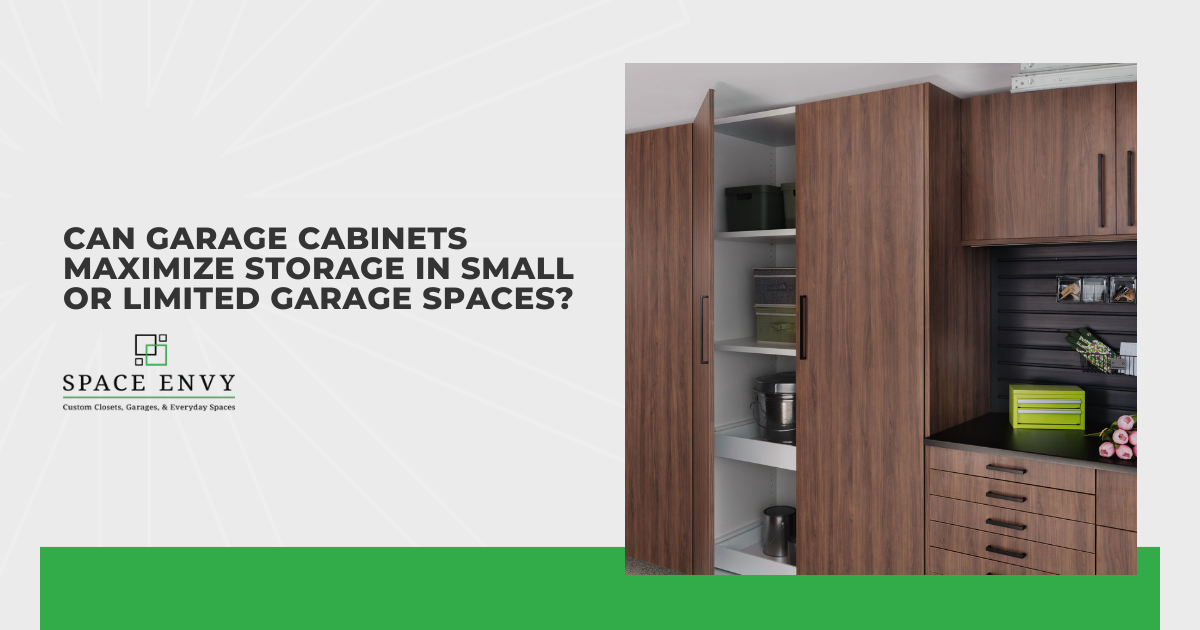
Small garages have a way of feeling impossible to organize, and in my experience, it's one of the most consistent pain points I run into in this work. Limited square footage, awkward layouts, and a constant accumulation of tools, equipment, and seasonal items make it easy for a garage to feel more like a storage disaster than a functional space. What most people don't realize is that the problem isn't the size of the garage but rather the lack of proper garage cabinets designed to work within it.
Custom cabinet systems are one of the most effective solutions that can transform a tight, cluttered garage into a space that actually works. They are designed around your specific dimensions, which means every inch of available wall and vertical space gets put to use rather than wasted. Whether your garage fits one car or struggles to fit anything at all, the right cabinet layout can change how the entire space functions from the ground up.
To make the most of every inch, here's how garage cabinets can tackle the storage challenges of small or limited garage spaces:
- Use vertical space to your advantage
- Customize your layout to fit every corner
- Consolidate clutter into dedicated storage zones
- Choose the right cabinet configuration for your needs
- Incorporate overhead and wall-mounted storage solutions
- Keep frequently used items accessible
- Maximize floor space by going off the floor
- Invest in durable cabinets that grow with your needs
Let's go through each approach and see exactly how garage cabinets can turn a limited, frustrating space into organized, functional storage that works from the ground up.
Use Vertical Space to Your Advantage
Vertical space is the most underused resource in almost every small garage I work with, and it's usually the first thing I point to when someone tells me they've run out of room. Floor-to-ceiling cabinet systems unlock storage capacity that most people don't even consider because they're too focused on floor space. Going vertical doesn't just add storage, it completely reframes how much a small garage can actually hold.
Tall cabinet configurations work particularly well in tight spaces because they draw the eye upward and create a sense of height that makes the garage feel larger than its footprint suggests. Items accessed daily go at eye level, seasonal gear moves to upper sections, and rarely used equipment sits at the top where it stays out of the way but remains accessible. Organizing vertically by frequency of use is one of the most practical shifts I recommend because it makes daily garage use smoother without sacrificing storage capacity.
Keeping the floor clear is one of the most immediate benefits of going vertical, and it matters more in a small garage. Clear floor space creates room to park, move around, and actually use the garage as a functional space rather than just a place to store things. I've seen small garages go from feeling completely unworkable to genuinely functional simply by moving storage off the floor and up the walls with floor-to-ceiling cabinets.
Customize Your Layout to Fit Every Corner
Off-the-shelf storage systems assume your garage fits a standard template, and most don't. Awkward corners, uneven wall lengths, low ceilings, and structural obstructions get ignored by generic shelving but addressed directly by a custom cabinet layout. From my experience, the garages that struggle most with storage are the ones where the storage system wasn't built to fit the specific quirks of the space.
Custom garage cabinet layouts treat every wall, corner, and recess as an opportunity rather than an obstacle. Here’s what a tailored layout addresses that standard systems simply can't:
- Awkward Corners: Custom corner cabinet configurations turn dead space into functional storage without wasting the square footage most standard systems leave unused.
- Irregular Wall Lengths: Cabinets sized to your exact wall dimensions eliminate the gaps and mismatches that make standard systems look unfinished and feel inefficient.
- Low Ceilings: A cabinet’s height adjusted to your specific clearance can maximize storage capacity without creating overhead hazards or wasted space above the units.
- Structural Obstructions: Columns, beams, and utility lines get worked around rather than ignored, keeping the layout clean and fully functional throughout the space.
Your garage feels different when storage was designed around it rather than dropped into it, and custom layouts deliver exactly that. Space that a standard system would leave empty becomes functional storage built specifically for your dimensions. Getting this right is what separates a cabinet system that transforms a small garage from one that simply adds more stuff in a different arrangement.
Consolidate Clutter Into Dedicated Storage Zones
Clutter in a small garage rarely comes from having a number of piled boxes or items. More often it comes from not having a designated place for anything. Creating dedicated storage zones with garage cabinets is one of the most effective organizational changes I've made for tight spaces because it brings structure to a space that previously had none.
Cabinets with doors are particularly powerful in a small garage because they contain the visual chaos that open shelving can't. When tools, equipment, cleaning supplies, and seasonal items each have their own dedicated zone behind closed doors, the garage immediately feels calmer and more manageable even before a single item gets reorganized. That reduction in visual clutter alone makes a small garage feel noticeably larger.
Dedicated zones also make the space more functional on a daily basis. When everything has a specific home, you spend less time searching and more time actually using your garage the way it was meant to be used. I always organize cabinet zones around how the space gets used, keeping car care products near the garage door, tools near the workbench, and seasonal items in the zones that are easiest to access a few times a year without getting in the way.
Choose the Right Cabinet Configuration for Your Needs
Cabinet configuration is where a storage system either works well for your specific situation or falls short of what the space actually needs. Base cabinets, wall cabinets, tall cabinets, and combination systems each serve a different purpose, and getting the mix right is what determines how much storage you actually end up with. In my experience, most small garages benefit from a combination of all three rather than relying on a single cabinet type to do everything.
Below is a quick breakdown of each cabinet type and what it does best in a small or limited garage space:
- Base Cabinets: Sit at counter height and provide accessible storage for frequently used items and tools. They work well as a workspace surface when topped with a countertop.
- Wall Cabinets: Mount above base cabinets or independently on the wall to maximize vertical storage without using floor space. Best for lighter items, supplies, and organized categories of smaller tools.
- Tall Cabinets: Floor-to-ceiling units that offer the highest storage capacity per linear foot of wall space. Ideal for brooms, long-handled tools, bulk supplies, and oversized items.
- Combination Systems: Mix of base, wall, and tall cabinets designed around the specific dimensions and needs of your garage. Deliver the most efficient use of available wall space in a small or limited garage.
Matching your cabinet configuration to what you actually store and how often you access it is what makes the difference between a system that works and one that just looks good. I always start with the items that need the most storage and work backward from there to determine which cabinet types and sizes make the most sense for the space. Getting this right from the start means your cabinet system works for you every day rather than becoming something you work around.
Incorporate Overhead and Wall-Mounted Storage Solutions
Garage cabinets do the heavy lifting in a small storage system, but pairing them with overhead and wall-mounted solutions is what takes the space from functional to fully maximized. Every part of a small garage wall and ceiling has storage potential, and a layered approach makes sure none of it goes to waste. Spaces that feel the most organized and open are almost always the ones that use multiple storage layers rather than relying on cabinets alone, and that's something I keep in mind on every small garage project.
Overhead racks and wall-mounted systems work best when they're planned alongside the cabinet layout rather than added as an afterthought. Let’s look at how each layer contributes to a complete storage solution in a small or limited garage:
- Overhead Racks: Mount to the ceiling above parked vehicles to store seasonal items, bins, and bulky equipment that don't need regular access.
- Wall-mounted Hooks and Rails: Install between or beside cabinets to hang bikes, ladders, hoses, and sports equipment vertically then keep oversized items off the floor.
- Pegboards and Slat Walls: Mount above workbenches or between cabinets for tool storage that's visible, accessible, and easy to reconfigure as needs change over time.
- Shelving above Cabinets: Use the wall space between the top of your cabinets and the ceiling for bins, boxes, and items accessed only a few times a year.
Layering storage solutions turns every surface in a small garage into functional space rather than leaving anything unused. Cabinets handle the bulk of organized storage while overhead and wall-mounted systems take care of the items that don't fit neatly into a cabinet or need to stay accessible without taking up prime wall real estate. Together, they create a storage system that makes a small garage feel like it was designed to hold everything you need.
Keep Frequently Used Items Accessible
Smart storage in a small garage isn't just about fitting more in, it's about making sure the right things are easy to reach without disrupting everything else. Poor accessibility is one of the most common complaints I hear about existing garage storage systems, and it almost always comes down to items being stored based on available space rather than how often they're actually used. Reorganizing around frequency of use changes how a garage feels to work in on a daily basis.
Cabinet placement and height play a direct role in how accessible your storage is. Items you reach for every day should sit at eye level or within easy arm's reach, while seasonal gear and rarely used equipment move to higher shelves or the back of deeper cabinets. That simple shift in how storage gets assigned to cabinet zones eliminates the frustration of digging through infrequently used items to get to the things you need most.
In a small garage where every cabinet counts, accessibility also affects how efficiently the space gets used over time. When frequently used items are easy to grab and put back, the garage stays organized naturally rather than slowly drifting back toward clutter. I always plan cabinet layouts around daily use patterns first, because a storage system that's easy to use consistently is one that actually gets maintained.
Maximize Floor Space by Going Off the Floor
Floor space in a small garage is too valuable to give up to storage that could just as easily live on the walls. Wall-mounted and elevated cabinet systems keep the floor clear for parking, workspace, and movement, which makes a small garage feel significantly more functional and less claustrophobic. I've seen the same small garage feel completely different before and after wall-mounted cabinets went in simply because the floor opened up and the space became usable again.
Here’s how going off the floor helps maximize both space and storage performance in a small garage:
- Wall-Mounted Cabinets: Hang directly on the wall with no floor contact, keeping the entire floor surface clear for parking and movement.
- Elevated Base Cabinets: Sit on legs or a raised base that lifts the cabinet off the floor, allowing for easier cleaning underneath and better protection from moisture.
- Toe Kick Storage: Built into the base of floor-mounted cabinets to use the recessed space at floor level for flat, shallow items.
Floor clearance changes everything in a small garage, and it's one of the most immediate improvements a wall-mounted cabinet system delivers. Clear floor space changes how you move through the garage and how much you can actually do in it, whether that's parking a vehicle, setting up a workspace, or simply getting in and out without navigating around stored items. Cabinet systems designed around floor clearance turn tight garages into spaces that feel bigger than their square footage suggests.
Invest in Durable Cabinets That Grow With Your Needs
Cheap storage solutions have a way of costing more in the long run, and in a small garage where every cabinet has to pull its weight, that trade-off becomes even more obvious. Flimsy shelving units and low-quality cabinets wear out, lose structural integrity, and end up getting replaced far sooner than a well-built system would. I've watched quality cabinet systems outlast two or three rounds of cheaper alternatives in the same garage, and the math never works out in favor of cutting corners.
Modular cabinet systems are particularly valuable in a small garage because they can be reconfigured or expanded as your storage needs change over time. These are the areas where a durable, well-built garage cabinet system consistently outperforms cheaper alternatives:
- Structural Integrity: Quality cabinets hold their shape and weight capacity over years of use without sagging, warping, or losing their functionality.
- Modularity: Modular systems can be reconfigured, added to, or reorganized as your storage needs evolve without requiring a full replacement.
- Climate Resistance: Powder-coated steel holds up against moisture, temperature swings, and humidity that degrade lower-quality cabinet materials quickly.
- Long-term Value: A well-built cabinet system installed once and maintained properly costs significantly less than replacing cheaper alternatives every few years.
Durable cabinets aren't just a better product, they're a better long-term decision for a small garage where storage efficiency depends on every component doing its job consistently. A system that holds up over time means you're not constantly re-evaluating your storage setup or working around cabinets that have started to fail. I always recommend investing in quality from the start because in a small garage, there's very little room to compensate for storage that doesn't hold up.
Conclusion
The size of your garage doesn't have to dictate its overall functionality, and garage cabinets are a clear example of this principle. A well-built cabinet system can effectively transform previously unused corners, barren empty walls, and perpetually cluttered floors into organized, accessible storage areas. With the right layout and cabinet configuration, you will immediately notice substantial improvements in how the space looks, feels, and functions for your specific needs.

QUICK LINKS
CONTACT INFO
Mailing Address
22 S Newberry Way,
Nampa, ID 83651
Showroom
1229 N Midland Blvd.
Nampa, ID 83651
(By Appointment Only)
Phone
SCHEDULE A CONSULTATION
Contact us, and we will come out and discuss your project free of charge.